Table of Contents
- Introduction
- The Truth About Medical Claim Denials
- What Medical Billing Coding Software in the USA Actually Catches Before Submission
- Inside the Denial Cycle: From Submission to Payment
- What Practices Should Expect From Modern Billing Technology
- How ReLi Med Solutions Supports Better Healthcare Billing Workflows
- Frequently Asked Questions
Every practice administrator has seen it. The patient was treated, the chart was signed, and the reimbursement still never arrived. Medical billing in USA runs on payer-specific policies, annual code revisions, and strict timely filing limits. Most denials are not complicated. They stem from small, preventable errors that accumulate across thousands of claims. That is why medical billing coding software in the USA has become a core part of protecting practice revenue. Here is what actually drives denials, and how better tools reduce them.
The Truth About Medical Claim Denials
Small Errors
A missing modifier or a transposed digit in a member ID is enough to trigger a rejection.
Eligibility Gaps
Coverage that terminated last month often goes unnoticed until the payer returns the claim.
Coding Mismatches
When the diagnosis does not support medical necessity for the procedure billed, payers deny quickly.
Missing Authorizations
Prior authorization requirements are easy to overlook at a busy front desk.
Late Filing
Each payer sets its own timely filing deadline, and a missed one is rarely recoverable.
What Medical Billing Coding Software in the USA Actually Catches Before Submission
Strong software acts as a quality-control checkpoint. It reviews every claim before it reaches the payer.
- Code validation: Confirms that CPT, ICD-10, and HCPCS codes are current and correctly paired.
- Modifier checks: Flags missing or conflicting modifiers that commonly trigger NCCI and payer edits.
- Eligibility verification: Confirms active coverage and plan benefits before the encounter is billed.
- Duplicate detection: Identifies claims that match ones already submitted.
- Payer rule scrubbing: Tests each claim against the specific edits that the payer enforces.
Inside the Denial Cycle: From Submission to Payment
- Claim scrubbing: Software checks the claim for coding and formatting mistakes before it goes out.
- Clearinghouse review: The clearinghouse looks over the file and sends it to the right payer.
- Payer adjudication: The insurance company decides to pay it, cut it, or deny it.
- Remittance posting: Payment and denial codes come back on the ERA, and your team posts them to the patient’s account.
- Appeal and resubmission: Denied claims get fixed, appealed, and sent again before the payer’s deadline runs out.
This loop is the heart of the RCM cycle in medical billing. If one step breaks down, cash comes in slower and your days in accounts receivable go up.
What Should Practices Expect From Modern Billing Technology?
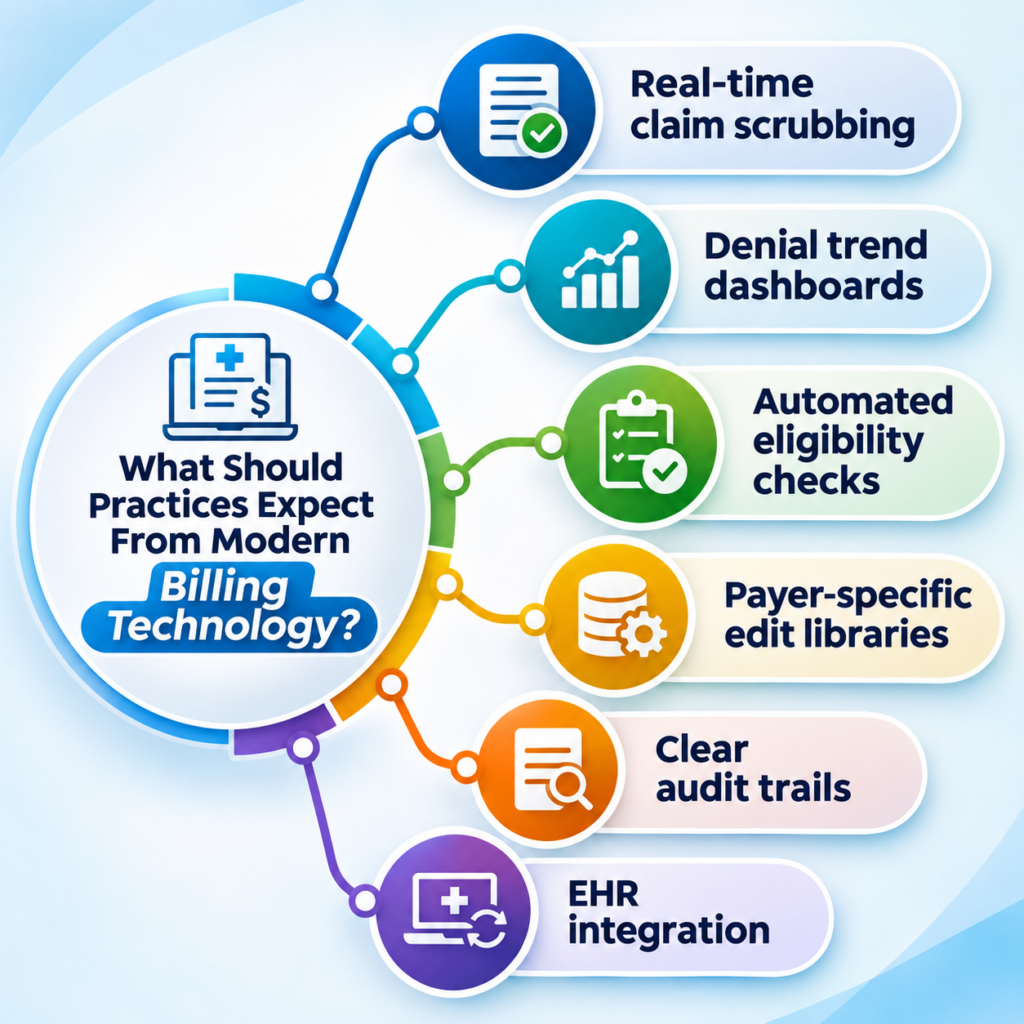
A medical billing software system should do more than store claims. It should help your staff identify problems early, resolve them quickly, and learn from every denial. A tool that only reports losses after they occur is not doing its job.
- Real-time claim scrubbing
- Denial trend dashboards
- Automated eligibility checks
- Payer-specific edit libraries
- Clear audit trails
- EHR integration
How ReLi Med Solutions Supports Better Healthcare Billing Workflows
ReLi Med Solutions operates as a medical billing agency that pairs certified billing specialists with practical technology. The objective is straightforward: fewer surprises between the patient encounter and payment posting. We don’t wait for denials to show up and then scramble. Our team checks claims at every step, so most problems get caught before a payer ever sees them.
- Pre-submission claim reviews
- Denial root-cause tracking
- Payer-specific coding guidance
- Timely follow-up on unpaid claims
- Transparent performance reporting
Clean claims don’t happen by accident. They come from a steady process that your staff and ours follow every day. Whether you run a single-provider clinic or a growing multi-speciality group, the approach scales with your claim volume and payer mix.
Ready to cut denials and get paid faster? Call ReLi Med Solutions at (919) 896-8974 or email sales@relimedsolutions.com today.
Frequently Asked Questions
1. Can medical billing coding software identify payer-specific claim errors?
Yes, most of the good ones can. The software checks each claim against what the payer requires, such as modifiers, bundling rules, and documentation. If something doesn’t match, it flags the claim before you send it. How well it works depends on one thing: whether the vendor keeps those payer rules up to date.
2. What is the role of denial analytics in revenue cycle management?
It tells you why claims are being denied, not only how many. When you sort denials by payer, CPT code, or provider, the pattern usually points to one fixable cause. Fix that, and you get paid faster and write off less.
3. How can outpatient practices reduce repeated claim rework?
Get the front end right. Confirm eligibility at check-in, collect complete patient and insurance details, and run every claim through a scrubber before it goes out. Then review denial reports on a set schedule so the same error does not recur. Partnering with an experienced medical billing agency can accelerate that process.